Christian nationalism is a form of religious nationalism that focuses on promoting the Christian views of its followers, in order to achieve prominence or dominance in political, cultural, and social life. In countries with a state church, Christian nationalists seek to preserve the status of a Christian state.
By country
Brazil
In Brazil, Christian nationalism, a result of a Catholic-Evangelical coalition, has a goal of curbing the influence of "moral relativism, social liberalism, alleged neo-Marxism in its various forms, and LBGTQ rights".
A 2024 Pew Research Center survey found that 13% of Brazilians self-identified as "religious nationalists".
Canada
The COVID-19 pandemic saw a rise in Christian nationalist activity with many groups using anti-lockdown sentiments to expand their reach to more people. The group Liberty Coalition Canada has garnered support from many elected politicians across Canada. In their founding documents they argue that "it is only in Christianized nations that religious freedom has ever flourished". Their rallies have attracted the support of Alex Jones and Canada First, a spin-off of Nick Fuentes' group America First. Many of Liberty Coalition Canada's leaders are pastors who have racked up millions in potential fines for violating COVID protocols and in many cases express ultra-conservative views.
A 2024 Pew Research Center survey found that that 3% of Canadians self-identified as "religious nationalists".
Finland
The far-right and pro-Russian Power Belongs to the People (VKK) party has been described as Christian nationalist by Helsingin Sanomat. Sanan- ja uskonnonvapaus ry (Freedom of Speech and Religion Association), associated with MP Päivi Räsänen of the Christian Democrats, has also supported openly fascist candidates of Blue-and-Black Movement that seek to ban the LGBT movement and "non-native religions". The association also supports VKK and Freedom Alliance. The Blue-and-Black movement itself is also inspired by the Christian fascist Patriotic People's Movement. Aforementioned local far-right pro-Russian parties have recruited combatants for the Russian side in Ukraine, who have then after gone to the Russian Imperial Movement's training camps in St. Petersburg and become fighters in the Russo-Ukrainian War.
Ghana
In Ghana, Christian nationalists seek to uphold what they see as "traditional markers of Ghanaian identity including, Christianity, social conservatism, and antagonism to 'progressive' 'Western' ideas, such as LGBTQ equality".
A 2024 Pew Research Center survey found that that 17% of Ghanaians self-identified as "religious nationalists".
Hungary
The Kingdom of Hungary under the leadership of Miklós Horthy is often seen by many historians as Christian nationalist in nature. Historian István Deák described the Horthy regime in the following way:
Between 1919 and 1944 Hungary was a rightist country. Forged out of a counter-revolutionary heritage, its governments advocated a "nationalist Christian" policy; they extolled heroism, faith, and unity; they despised the French Revolution, and they spurned the liberal and socialist ideologies of the 19th century. The governments saw Hungary as a bulwark against bolshevism and bolshevism's instruments: socialism, cosmopolitanism, and Freemasonry. They perpetrated the rule of a small clique of aristocrats, civil servants, and army officers, and surrounded with adulation the head of the state, the counterrevolutionary Admiral Horthy.
Hungarian Prime Minister Viktor Orbán has often advocated for Christian nationalism, both within Hungary and as a type of international movement including Other European and American Christian nationalists.
A 2024 Pew Research Center survey found that that 1% of Hungarians self-identified as "religious nationalists".
Russia
President of Russia Vladimir Putin has been described as a global leader of the Christian nationalist and Christian right movements. As President, Putin has increased the power of the Russian Orthodox Church and proclaimed his staunch belief in Eastern Orthodoxy, as well as maintaining close contacts with Patriarchs of Moscow and all Rus' Alexy II and Kirill.
The Russian Imperial Movement is a prominent neo-Nazi Christian nationalist group that trains militants all over Europe and has recruited thousands of fighters for its paramilitary group, the Imperial Legion, which is participating in the invasion of Ukraine. The group also works with the Atomwaffen Division in order to network with and recruit extremists from the United States.
South Africa
The future leader of the National Party and Apartheid Prime Minister of South Africa, B. J. Vorster in 1942 declared: "We stand for Christian Nationalism which is an ally of National Socialism. You can call this anti-democratic principle dictatorship if you wish. In Italy, it is called Fascism; in Germany, National Socialism and in South Africa, Christian Nationalism."
While the National Party was primarily concerned about the nationalist interest of Afrikaners, there was a strong adherence to Calvinist interpretations of Christianity as the bedrock of the state. Moreover, by advancing ideas of Christian Nationalism, the National Party could incorporate other "nations" in their programme of racial hierarchies and segregation. The Dutch Reformed Church in South Africa provided much of the theological and moral justification for Apartheid and the basis for racial hierarchy.
A 2024 Pew Research Center survey found that that 16% of South Africans self-identified as "religious nationalists".
United States
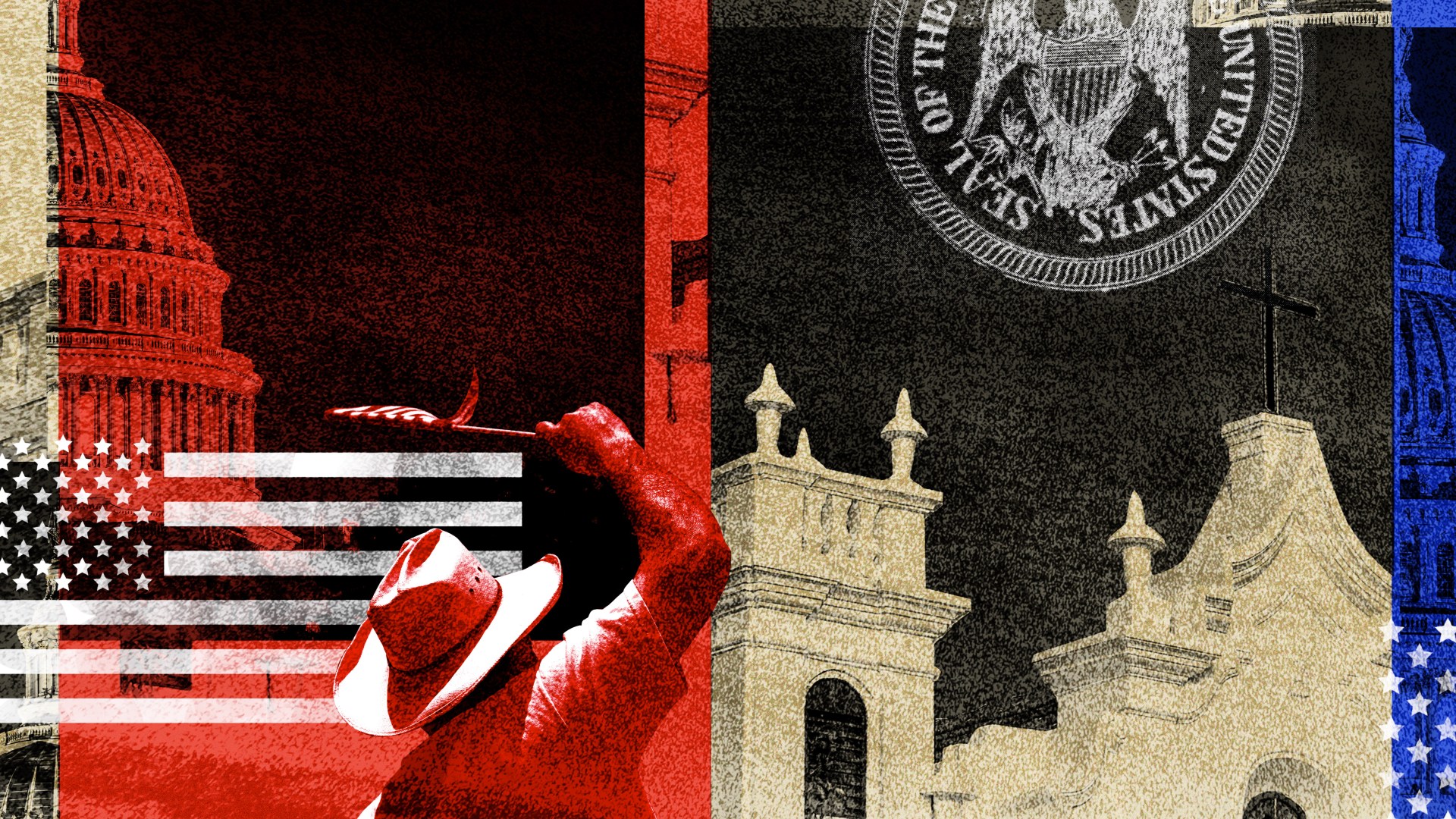
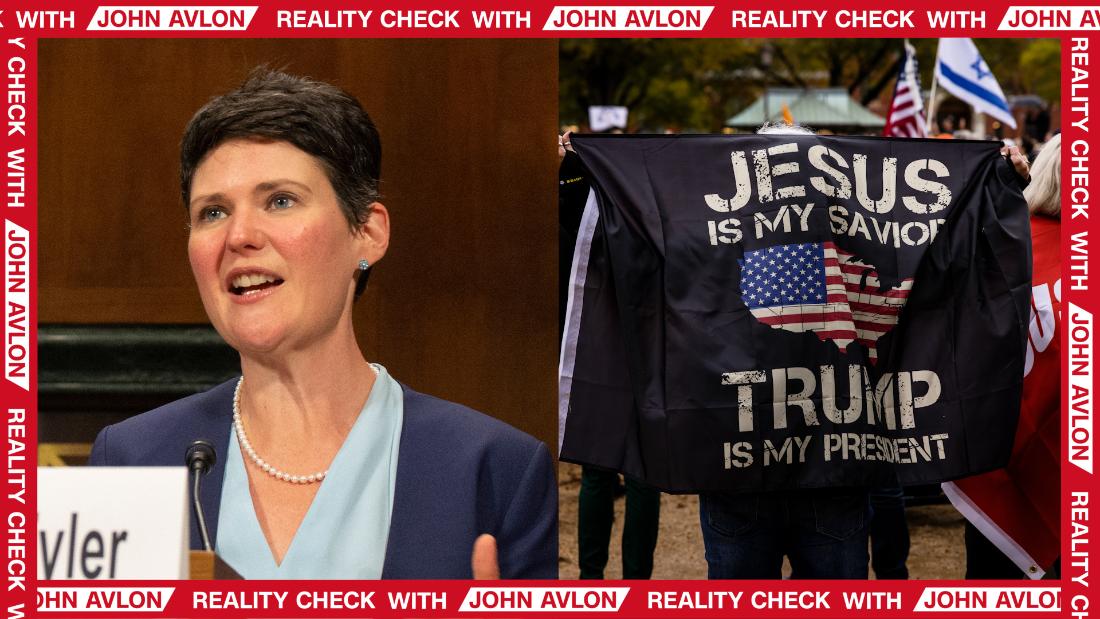
Christian nationalism asserts that the United States is a country founded by and for Christians. Christian nationalists in the United States advocate "a fusion of identitarian Christian identity and cultural conservatism with American civic belonging".: 3–4 It has been noted to bear overlap with Christian fundamentalism, white supremacy, Christian supremacy, the Seven Mountain Mandate movement, and dominionism.: 5 Most researchers have described Christian nationalism as "authoritarian" and "boundary-enforcing" but recent research has focused on how libertarian, small-government ideology and neoliberal political economics have become part of the American Christian political identity.: 3–4 Christian nationalism also overlaps with but is distinct from theonomy, with it being more populist in character. Theocratic Christians seek to have the Bible inform national laws and have religious leaders in positions of government; while in America, Christian nationalists view the country's founding documents as "divinely inspired" and supernaturally revealed to Christian men to preference Christianity, and are willing to elect impious heads of state if they support right-wing causes.: xxi
Christian nationalism supports the presence of Christian symbols in the public square, and state patronage for the practice and display of religion, such as Christmas as a national holiday, school prayer, singing God Bless America, the exhibition of nativity scenes during Christmastide, and the Christian Cross on Good Friday.: 7–10 During the Cold War, church attendance reached a highpoint in the 1950s, which was also when the United States added phrases like 'Under God' in the Pledge of Allegiance and on currency, described at the time as a 'civil religion' that was motivated in part to show distance from communism. Christian nationalism also influenced the constitution of the Confederacy, which mentioned God overtly in contrast with the US Constitution.
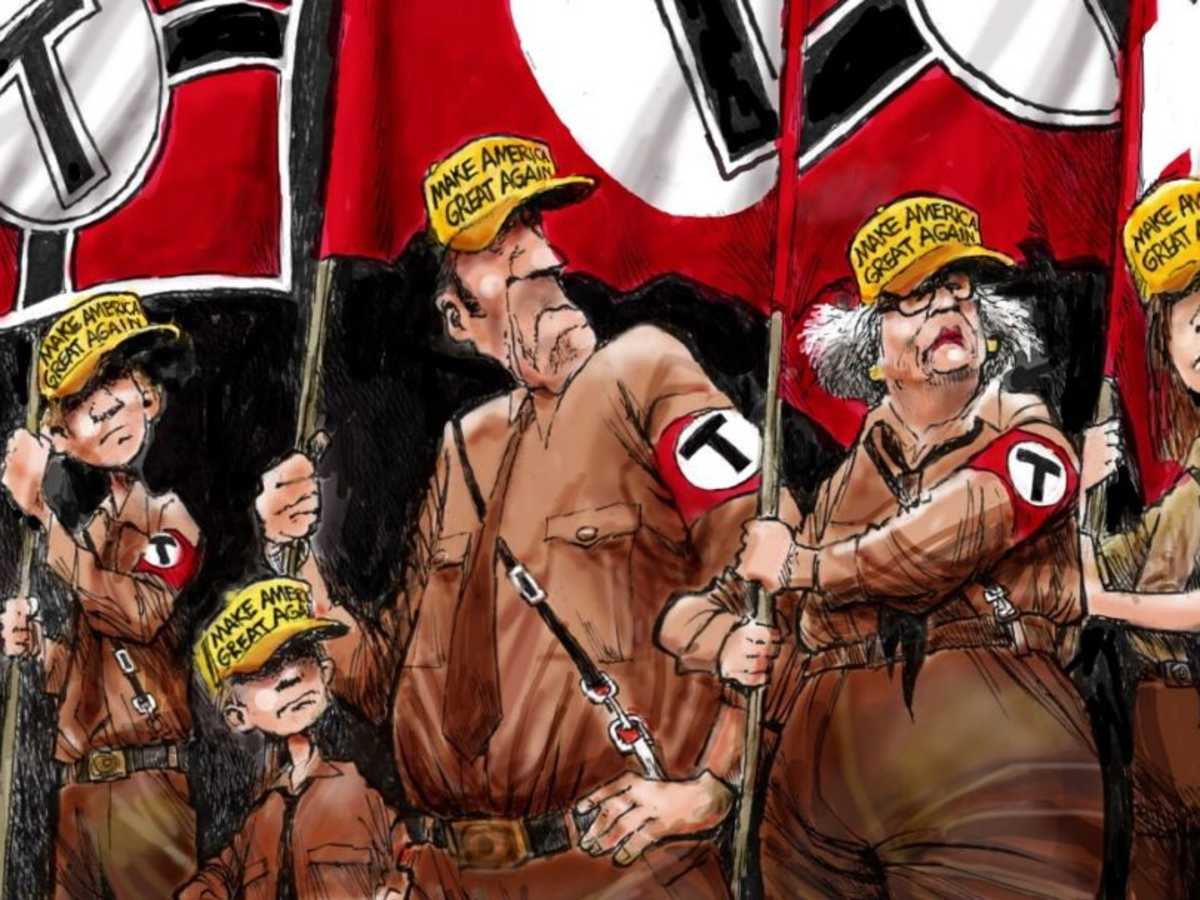
Christian nationalism has been linked to prejudice towards minority groups.: 4 Christian nationalism has been loosely defined as a belief that "celebrate[s] and privilege[s] the sacred history, liberty, and rightful rule of white conservatives".: 770 Christian nationalism prioritizes an ethno-cultural, ethno-religious, and ethno-nationalist framing around fear of "the other", those being immigrants, racial, and sexual minorities. Studies have associated Christian nationalism with xenophobia, homophobia, misogyny, political tolerance of racists, opposition to interracial unions, support for gun rights, pronatalism, and restricting the civil rights of those who fail to conform to traditional ideals of whiteness, citizenship, and Protestantism.: 6 The Christian nationalist belief system includes elements of patriarchy, white supremacy, nativism, and heteronormativity.: 7 It has been associated with a "conquest narrative", premillennial apocalypticism, and of frequent "rhetoric of blood, specifically, of blood sacrifice to an angry God".: 16
American Christian nationalism is based on a worldview that America is superior to other countries, and that such superiority is divinely established. It posits that only Christians are "true Americans". Christian nationalism also bears overlap with the American militia movement. The 1992 Ruby Ridge standoff and the 1993 Waco siege served as a catalyst for the growth of militia activity among Christian nationalists. Christian nationalists believe that the US is meant to be a Christian nation, and that it was founded as a Christian nation, and want to "take back" the US for God.
Christian nationalists feel that their values and religion are threatened and marginalized, and fear their freedom to preach their moral values will be no longer dominant at best or outlawed at worst.: 5 Experimental research found that support of Christian nationalism increased when Christian Americans were told of their demographic decline. Studies have shown Christian nationalists to exhibit higher levels of anger, depression, anxiety, and emotional distress. It has been theorized that Christian nationalists fear that they are "not living up to" God's expectations, and "fear the wrath and punishment" of not creating the country desired by God.: 19–20
See also
References
Further reading
- Revd Rob Schenck (October 2024). "Confessions of a (Former) Christian Nationalist" in Mother Jones
- Taylor, Matthew D. (October 2024). The Violent Take It by Force: The Christian Movement That Is Threatening Our Democracy. Broadleaf Books.
- Onishi, Bradley B. (2023). Preparing for War: The Extremist History of White Christian Nationalism—and What Comes Next. Minneapolis: Broadleaf Books. ISBN 9781506482163. OCLC 1332780792.
- Shortle, Allyson F.; McDaniel, Eric L.; Nooruddin, Irfan (2022). The Everyday Crusade: Christian Nationalism in American Politics. Cambridge University Press. doi:10.1017/9781009029445. ISBN 978-1-009-02944-5.
- Whitehead, Andrew; Samuel Perry (2020). Taking America Back for God: Christian Nationalism in the United States. OUP Oxford. ISBN 978-0190057886.
- O'Donnell, Jonathon (2020). Stausberg, Michael; Engler, Steven (eds.). "The Deliverance of the Administrative State: Deep State Conspiracism, Charismatic Demonology, and the Post-truth Politics of American Christian Nationalism". Religion. 50 (4). Taylor & Francis: 696–719. doi:10.1080/0048721X.2020.1810817. ISSN 1096-1151. S2CID 222094116.
- Seidel, Andrew (2019). The Founding Myth: Why Christian Nationalism Is Un-American. New York: Sterling Publishing. ISBN 978-1-4549-3327-4. OCLC 1100422366.
- Oltman, Adele (2012). Sacred Mission, Worldly Ambition: Black Christian Nationalism in the Age of Jim Crow. University of Georgia Press. ISBN 978-0-8203-4126-2.
- Backhouse, Stephen (2011). Kierkegaard's Critique of Christian Nationalism. OUP Oxford. ISBN 978-0-19-960472-2.
- McDonald, Marci (2010). The Armageddon Factor: The Rise of Christian Nationalism in Canada. Random House of Canada. ISBN 978-0-307-36788-4.
- Goldberg, Michelle (2007). Kingdom Coming: The Rise of Christian Nationalism. W. W. Norton. ISBN 978-0-393-32976-6.
- Bloomberg, Charles (1989). Christian Nationalism and the Rise of the Afrikaner Broederbond in South Africa, 1918-48. Palgrave Macmillan UK. ISBN 978-1-349-10694-3.
External links
- The Genesis of Christian Nationalism (October 26, 2024) by ProPublica
- Brooke Gladstone interview of Matthew D. Taylor (18:23)—On the Media, WNYC August 21, 2024
- "Michael Flynn's Holy War". Frontline. PBS. October 18, 2022.
- The Army of God Comes Out of the Shadows The Atlantic January 9, 2025