Molina de Aragón is a municipality located in the province of Guadalajara, Castile-La Mancha, Spain. According to the 2009 census (INE), the municipality had a population of 3,671 inhabitants. It held the record (−28.2 °C) for the lowest temperature measured by a meteorological station in Spain, and now it is in third place.
It was the seat of the taifa of Molina, a Moorish independent state, before it was reconquered by the Christians of Alfonso I of Aragon in 1129. On 21 April 1154 Manrique Pérez de Lara issued a sweeping fuero to the town of Molina, which he was building into a semi-independent fief. He and his descendants claimed to rule Molina Dei gratia ("by the grace of God"). Molina is also the type location of the carbonate mineral aragonite.
Main sights
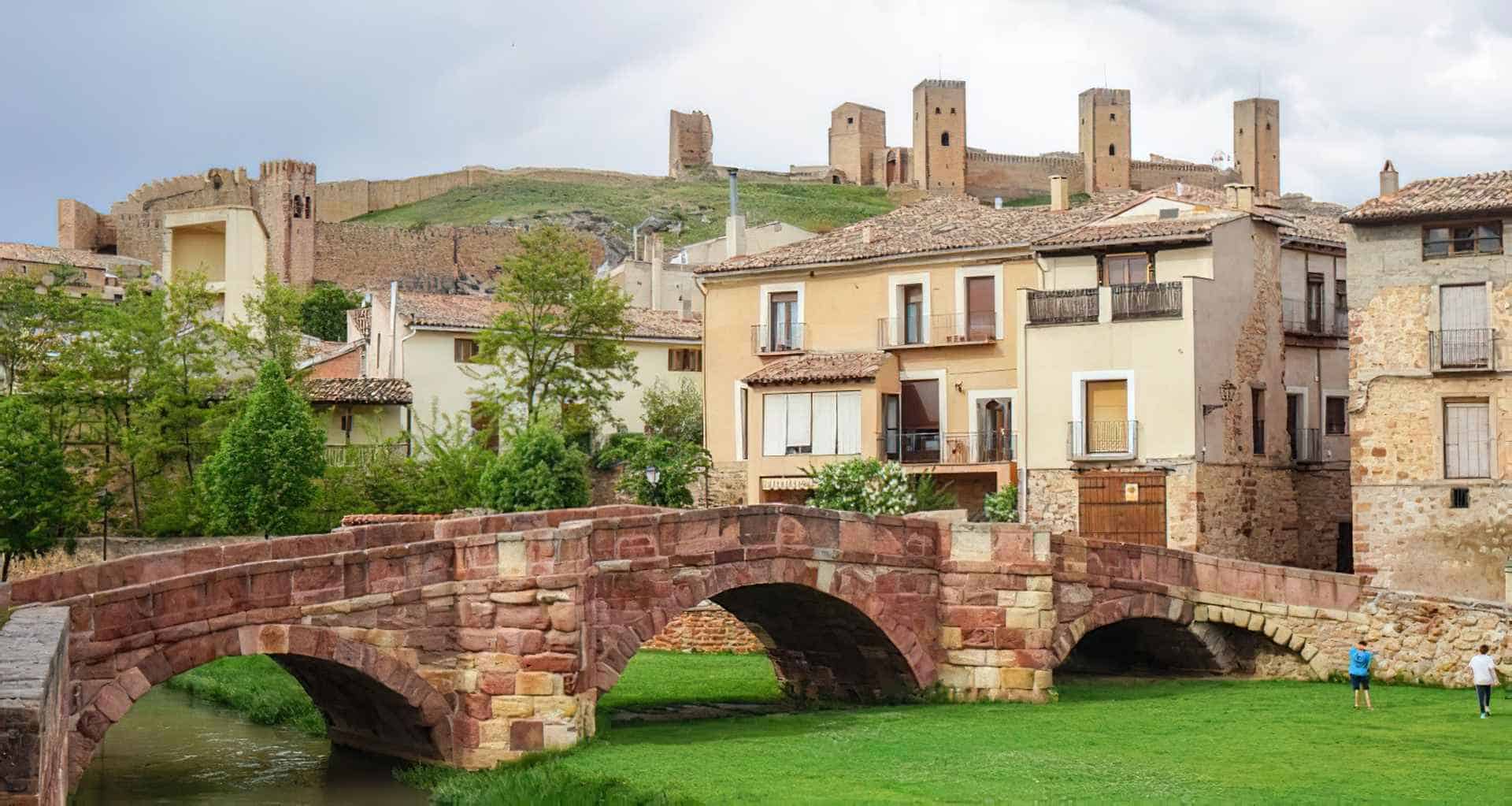
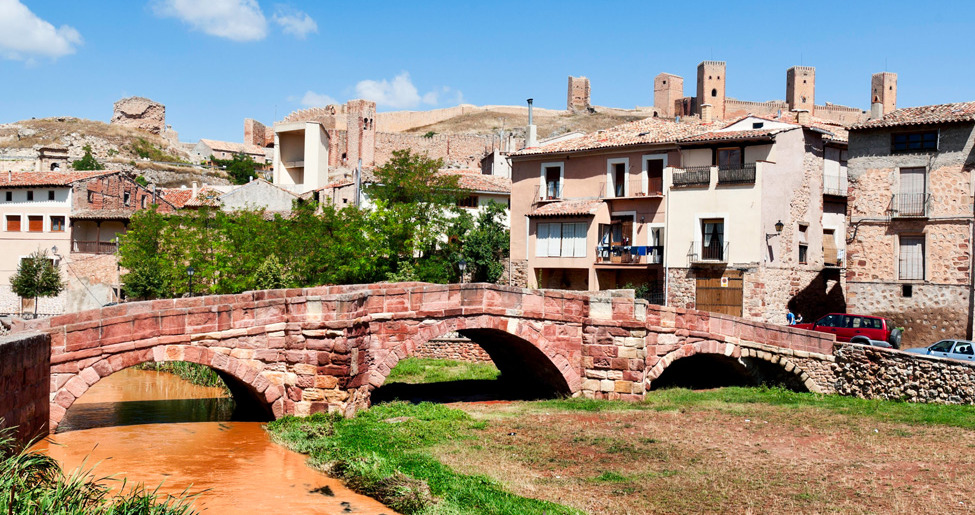
- Medieval alcazar (10th–11th centuries), the largest in the province
- Roman bridge (Puente Viejo)
- Convent of St. Francis
- Giraldo (St. Francis Church Bell Tower)
- Church of Santa Clara
- Church of Santa María de San Gil
- Molina-Alto Tajo Geopark, Molina de Aragon is within this Geopark.
List of settlements in the municipality
- Anchuela del Pedregal
- Cubillejo de la Sierra
- Cubillejo del Sitio
- Novella
- Tordelpalo
Climate
Molina de Aragón has a warm-summer mediterranean climate (Köppen climate classification: Csb) with some semi-arid influences. Precipitation is irregular throughout the year, with most rainfall occurring during spring and autumn. Winters are cold for Spanish standards, with temperatures often below 0 °C (32 °F) due to its altitude and its inland location. Summers are warm with mean maximum around 30 °C (86 °F) while the nights remain relatively cool.
Notable persons
- Claro Abánades López (1879-1973), Carlist politician and publisher
- Romualdo de Toledo y Robles (1895-1974), Carlist politician and longtime high official of Ministry of Education
- José María Araúz de Robles Estremera (1898-1977), Carlist politician and bull-breeder
Gallery
Notes