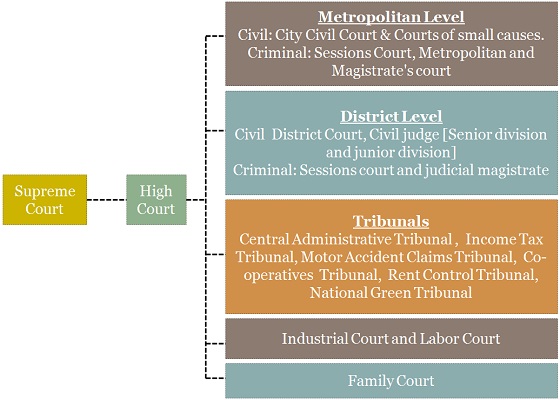
Tribunals in India are quasi-judicial bodies for settling various administrative and tax-related disputes, including matters that are under the jurisdiction of Central Administrative Tribunal (CAT), Income Tax Appellate Tribunal (ITAT), Customs, Excise and Service Tax Appellate Tribunal (CESTAT), National Green Tribunal (NGT), and Securities Appellate Tribunal (SAT), among others.
Tribunals in India are governed by The Tribunals Reforms Act, 2021.
Armed Forces Tribunal (AFT) is a military tribunal in India. It was established under the Armed Forces Tribunal Act, 2007.
The National Company Law Tribunal is a quasi-judicial body in India that adjudicates issues relating to Indian companies.
National Company Law Appellate Tribunal (NCLAT) was constituted under Section 410 of the Companies Act, 2013 for hearing appeals against the orders of National Company Law Tribunal(s) (NCLT), with effect from 1 June 2016.
There are 14 Tribunals in India.
Tribunals in India
Following are the tribunals in India.
Replaced and Dissolved Tribunals
Following is the list of tribunals dissolved and its replacements:
Composition
The tribunals consist of the chairman, vice-chairman, and others whose terms of office are restricted to five years; they are eligible for reappointment after retirement.
References